Ask a room full of teenagers how many of their classmates vape, and chances are the answers would be far higher than reality.
That’s exactly what concerns Canyons School District prevention specialist Ellie Bechard.
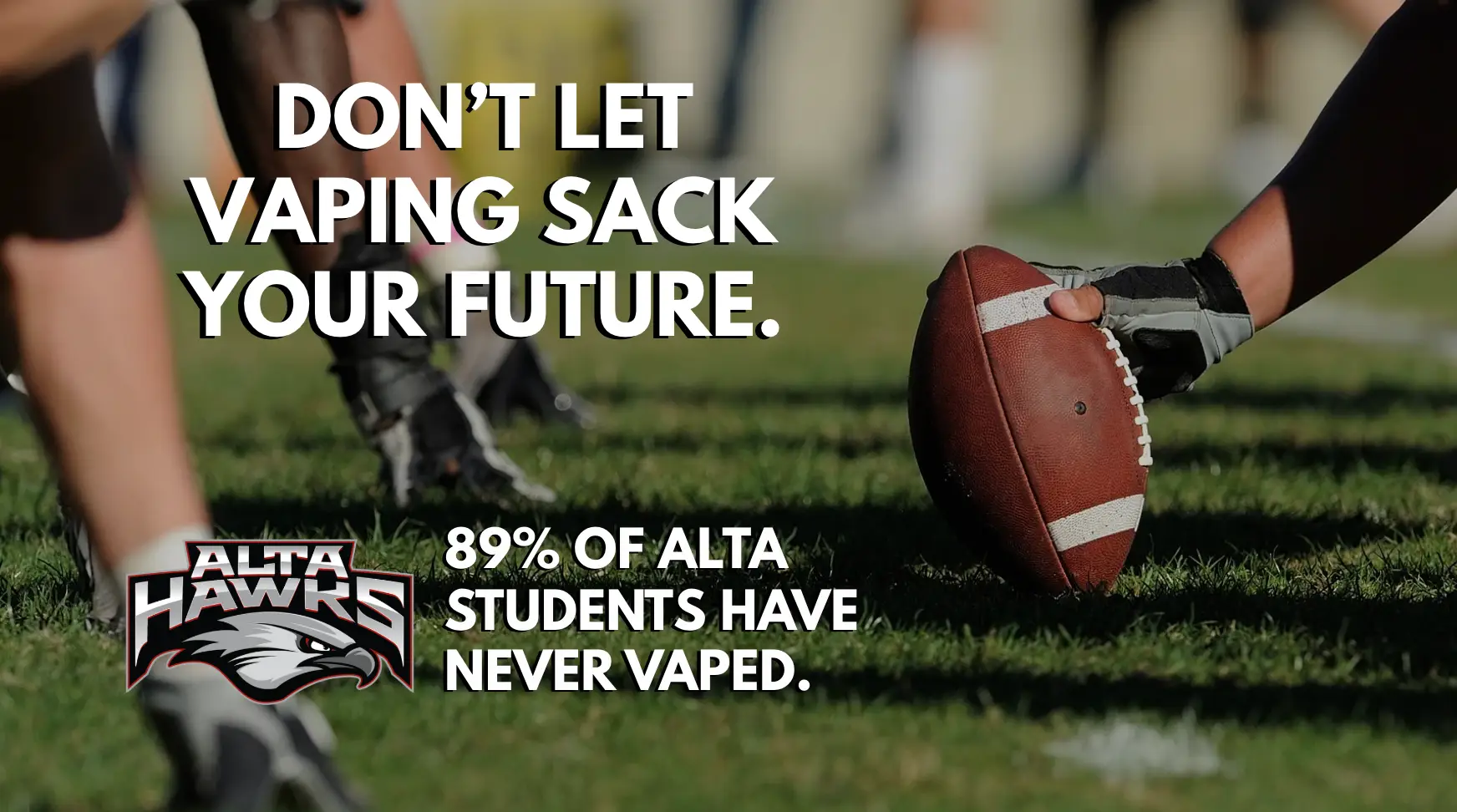
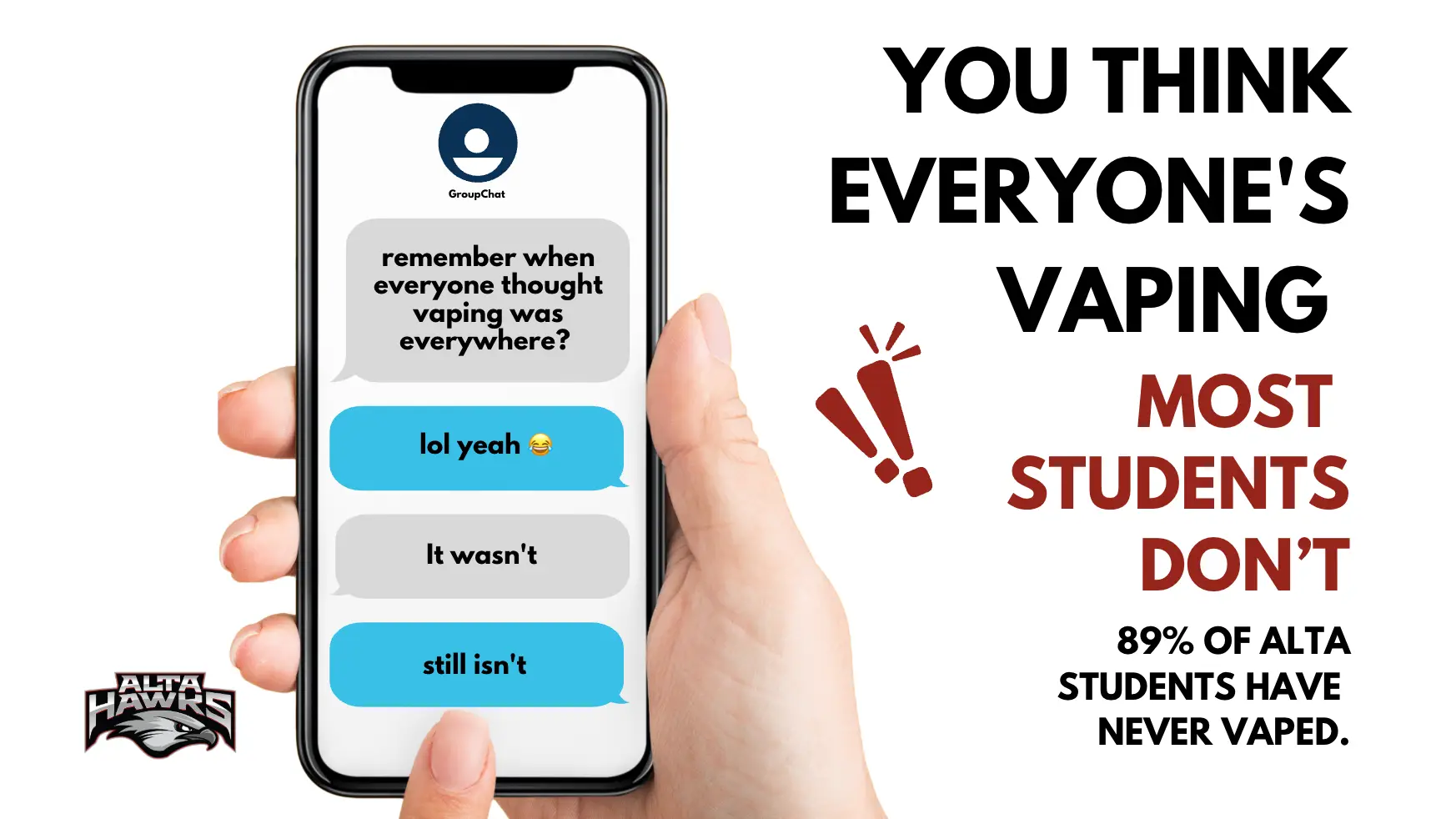
According to the latest Student Health and Risk Prevention (SHARP) Survey, Canyons students believe roughly one-third of their peers vape. In reality, 89 percent of Alta High students have never vaped.
That disconnect between perception and reality can be a risk factor for vaping rates to trend in the wrong direction, and has become the foundation of a new districtwide anti-vaping campaign launching this fall.
“We’re trying to challenge the myth,” said Bechard. “Students think vaping is much more common than it actually is. We want them to know that the overwhelming majority of their classmates are choosing not to vape.”
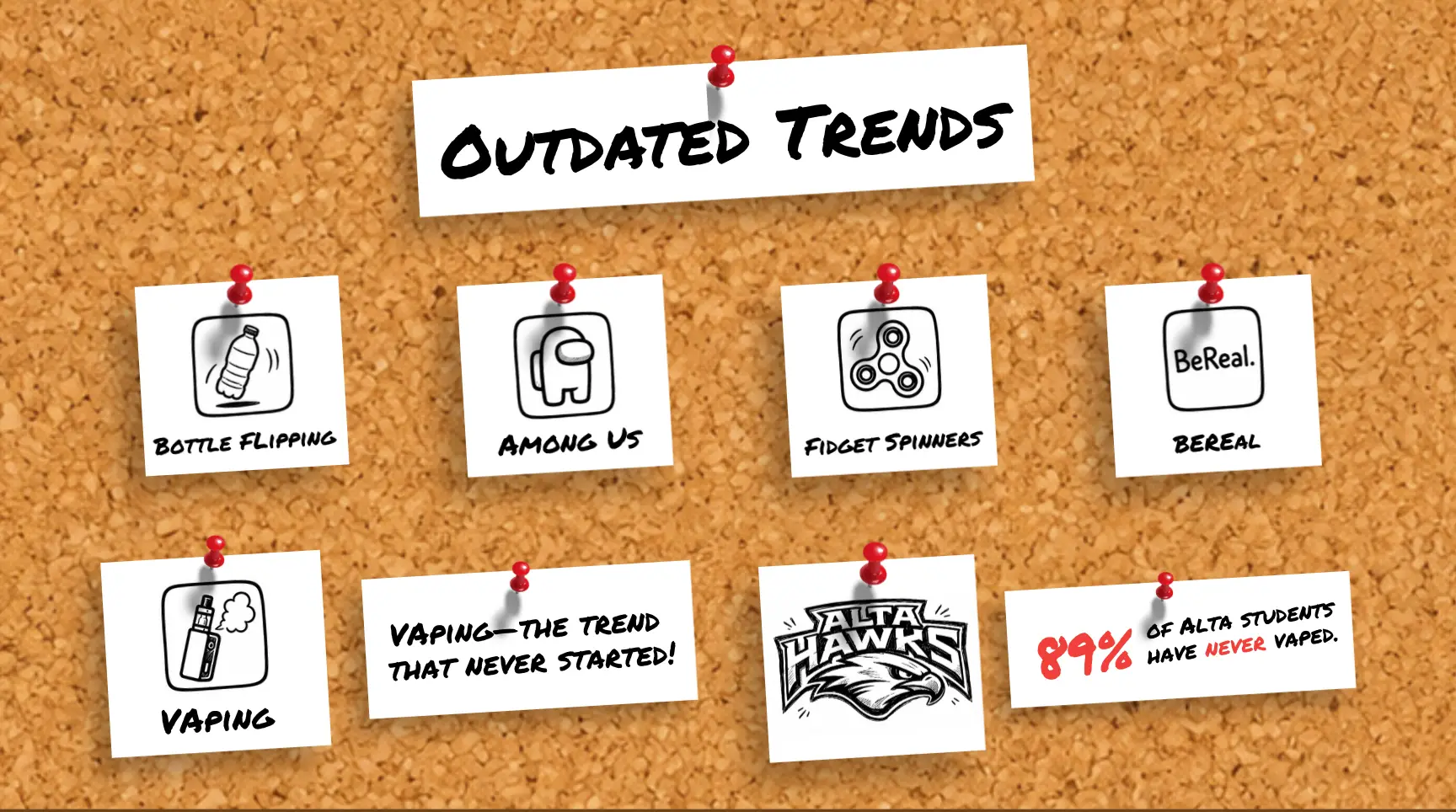
The campaign, funded through a Salt Lake County Health Department grant, will feature school-specific posters using each school’s own SHARP data. Rather than relying on scare tactics, the campaign emphasizes positive social norms.
One poster, for example, shows a series of text messages between friends talking about how vaping was never “a thing.” Another sports-oriented image reminds students, “You call the shots, not nicotine.”
District leaders hope the campaign helps students recognize that making healthy choices is actually the norm, not the exception.
The anti-vaping initiative comes as the latest SHARP Survey paints an encouraging picture of student health throughout Canyons.
Administered every two years with parental permission to students in grades 6, 8, 10, and 12, the anonymous statewide survey measures everything from substance use and sleep habits to school climate and family connectedness. The results help schools identify emerging concerns and guide prevention efforts.
This year’s data shows significant progress.
Since the previous survey cycle, marijuana use among Canyons students has dropped by roughly 34 percent. Vaping has declined by a similar margin, while alcohol use also continues to fall.
The survey also revealed encouraging improvements in student mental health. More students reported experiencing no symptoms of anxiety and depression compared to two years ago, while reports of suicidal thoughts, planning, and attempts all declined.
“For us, it tells us the investments we’re making in student wellness are making a positive impact,” said Bechard. “The healthier our students are and the safer they feel, the better they’re able to learn.”
Canyons is expanding prevention efforts beyond awareness posters.
Beginning this school year, middle and high school health classes will also incorporate the state-approved Catch My Breath curriculum, giving students science-based information about nicotine addiction and the effects vaping products have on the developing brain and body.
Parents remain an essential partner, and one of the strongest protective factors.
Students whose families establish clear expectations about substance use are significantly less likely to experiment with nicotine or other drugs. The survey also found simple family habits, such as eating meals together and encouraging healthy sleep routines, are associated with better mental health outcomes.
For parents concerned about vaping or nicotine use, Canyons offers substance abuse prevention classes through the Canyons Family Center, while Utah’s free WaytoQuit program provides counseling and cessation resources for youth and adults alike.
Still, compared with the national narrative often surrounding teenagers, the latest SHARP results offer reason for optimism.